At Corrales Grief Spa near Albuquerque, New Mexico, Reiki is a living, layered ceremony of energy, color, sound, and spirit.
When most people think of Reiki, they picture a quiet room and gentle hands. What Kristy offers at Corrales Grief Spa, near Albuquerque, goes far deeper than that. She creates a multisensory healing journey woven from decades of study, an open heart, and a sincere belief in the body’s capacity to find its way back to balance.
Kristy has been practicing Reiki since the early 1990s, tracing her lineage through both Shamanic and Angelic traditions. Over time, her sessions have evolved into something she calls Shamanic Angelic Reiki with Color Infusion and Sound, a distinctive, immersive approach that is difficult to find anywhere else in the Albuquerque area.
Here is what that actually looks and feels like.
She begins with the foundational practice of hands-on energy work, using the ancient art of directing universal life energy through the hands to areas of the body that feel out of balance or in need of attention. Each session weaves in practices drawn from a lifetime of study.
Kristy brings the healing language of color from her background in Art Psychotherapy. She may invite you to imagine your breath as a specific color that feels instinctively healing to you in this moment, and to guide that breath consciously into the parts of your body in need of care. This technique tends to anchor people in their own bodies in a way that words alone rarely can.
She also works with the angelic realm, calling in what she describes as angelic forces, guides of compassion and light, that she believes move through the healing space alongside her. And from her years of studying with shamans in New York and New Mexico, she draws on the medicine of the animal kingdom and the elements. These are active, intentional parts of the session.
Finally, Kristy often includes a sound bath of immersive vibrational tones that move through the room and through the body, completing the full, immersive healing experience.
Whether you are navigating grief, sitting with the weight of a life transition, or simply feeling depleted and disconnected from yourself, this kind of session offers the chance to feel held.
What Is Reiki — and Where Did It Come From?
Reiki as practiced in the United States today traces back to the teachings of Mikao Usui in Japan in the early 1920s. Usui was a lifelong spiritual seeker whose intense practice culminated in a profound revelation on Mount Kurama, a sacred mountain near Kyoto, where he is said to have fasted and meditated for 21 days.
One of his master students, Chujiro Hayashi, worked with Usui to develop and disseminate the healing practices more widely, opening a Reiki clinic in Tokyo. From there, a Japanese-American woman named Hawayo Takata brought Reiki to Hawaii in 1937 and eventually to the US mainland, where it has continued to grow.
The word Reiki itself combines two Japanese characters: rei, meaning universal, and ki, meaning life energy — the same vital force known as chi or prana in other traditions. It is administered through laying on of hands and is based on the idea that an unseen life force energy flows through us and is what causes us to be alive.
Today, Reiki has moved well beyond the realm of alternative wellness. Major institutions including the Mayo Clinic and UCLA now incorporate Reiki, and researchers at Harvard and Yale have begun creating studies to further understand what makes it work.
What Does the Research Say?
As of 2024, there are more than 110 Reiki research papers published in peer-reviewed scientific journals. Stronger studies point to Reiki’s effectiveness in reducing anxiety, pain, and fatigue, and in supporting emotional wellbeing and recovery from burnout.
A 2025 meta-analysis published in BMC Palliative Care analyzed data from 661 participants aged 14 and older, finding that Reiki therapy had a significant positive effect on quality of life.
A separate study published in 2025 offered Reiki to 91 outpatients at a community behavioral health clinic, many of whom were living with major depressive disorder, PTSD, or generalized anxiety disorder. Participants reported their ratings of pain, anxiety, fatigue, and emotional state before and after sessions. The results showed meaningful improvements across all measures.
Reiki is a complementary therapy that does not diagnose conditions or replace medical care.
Reiki and Grief: A Natural Partnership
Grief and Reiki have an intuitive kinship. Both ask us to slow down and feel rather than think our way through. And both recognize that healing is not linear.
Reiki’s calming influence on the nervous system supports emotional processing. Many clients describe a lightening of emotional heaviness, greater acceptance, and a profound sense of peace during transitions like divorce, loss, and grief.
At Corrales Grief Spa, Kristy offers Reiki sessions within a sanctuary that understands grief as a whole-body, whole-soul experience that holds space for every dimension of it.
Frequently Asked Questions About Reiki Near Albuquerque
What does Albuquerque Reiki feel like?
The most common experience is an almost immediate release of stress and a feeling of deep relaxation. Reiki is cumulative, and even people who don’t notice much the first time usually have progressively deeper experiences if they continue. Common sensations include warmth or tingling where the practitioner places her hands, a floating or dreamlike quality, and occasionally an emotional release such as tears or a deep sigh. Some people simply fall asleep, and that is perfectly fine.
Do I have to believe in Reiki for it to work?
What is needed is a willingness to experience the practice. Many people come to a Reiki session simply to explore how it feels, without expectations. Understanding and belief often develop after personal experience rather than before.
What should I wear or bring?
Kristy recommends loose, comfortable clothing. Arrive with an open mind and, if it helps, an intention for what you are hoping to release or receive.
How is Kristy’s approach different from standard Reiki?
Kristy’s sessions integrate hands-on energy work with color healing drawn from her Art Psychotherapy training, breath-based visualization, Shamanic practices including animal medicine and elemental awareness, Angelic attunement, and live sound bath immersion. It is a full-spectrum experience, and one she has built slowly, over thirty years of devoted practice.
Is Reiki safe if I am also in therapy or receiving medical treatment?
Yes. Reiki is designed to work alongside other forms of care, not in place of them. Reiki is officially recognized as a complementary therapy. If you are working with a therapist or physician, you are welcome to share that with Kristy, and she will honor whatever care team surrounds you.
How many sessions will I need?
There is no single answer. Some guests come for a single session as an act of self-care. Others choose to return weekly or monthly as part of an ongoing healing practice. Kristy will help you find the rhythm that serves you best.
Can Reiki help with grief specifically?
Grief tends to live in the body, and Reiki works at precisely that level. Studies consistently show its effectiveness in supporting anxiety, depression, and the emotional exhaustion that often accompanies loss. At Corrales Grief Spa, Reiki is one thread in a larger tapestry of grief support, and it is woven with intention.
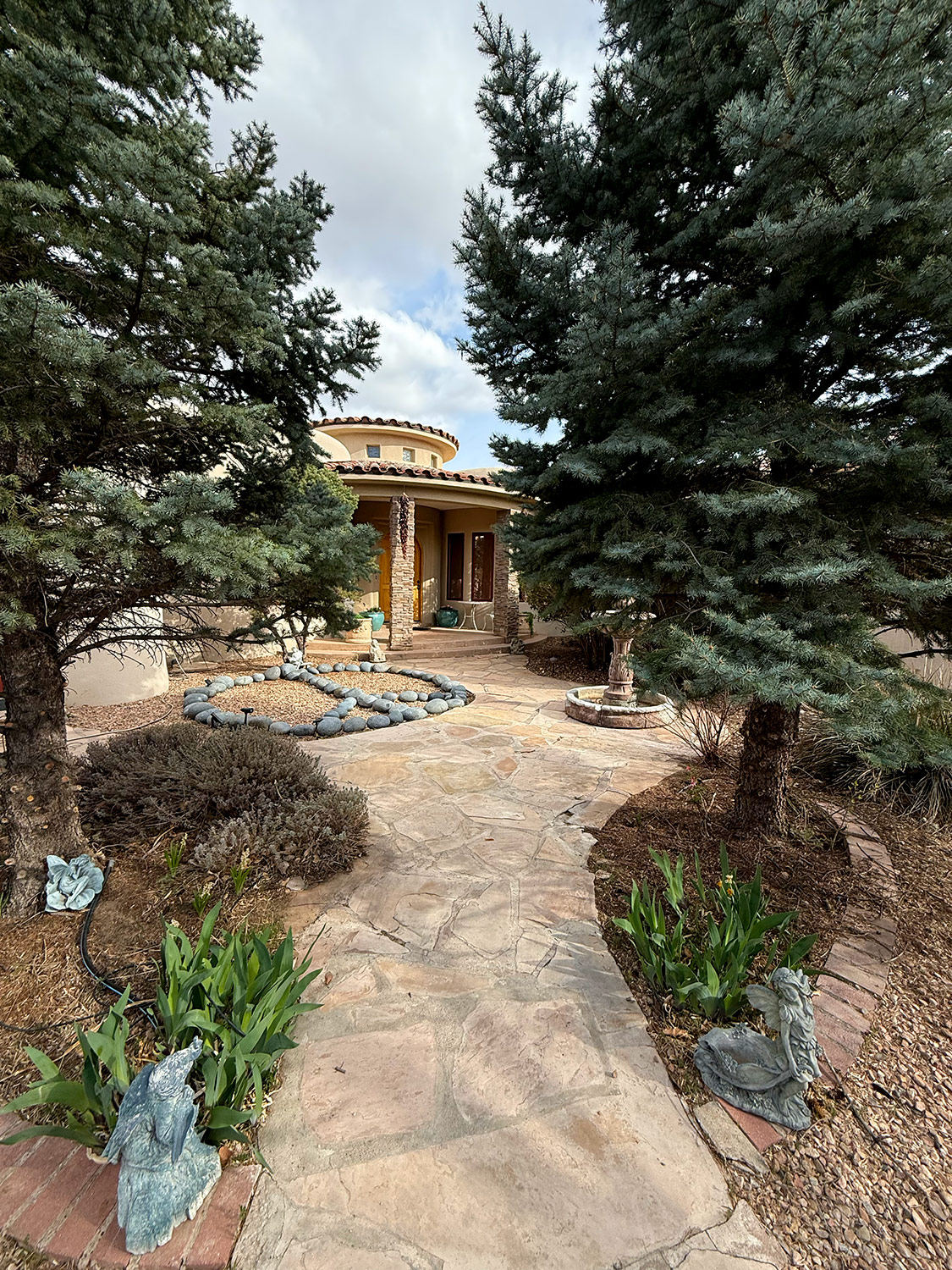
Nestled along the Rio Grande in Corrales, New Mexico, Corrales Grief Spa is a short drive from Albuquerque and a world away from the noise.
If you are ready to land, to breathe, and to begin again, Kristy is here.